
The Budget emerges as a measured, credible and forward-looking policy document that reinforces India's commitment to remaining a stable, reform-oriented economy amid an increasingly fragmented global landscape, says A Balasubramanian.

Jeetendra and his family-backed Balaji Telefilms is focusing on expanding the content slate on its streaming platform Kutingg through micro dramas and long-format binge shows after the recent ban on its subscription-based video-on-demand platform ALTT due to obscene content.

'The trade deficit in some sectors is huge and that is an area of opportunity to localise.'

Finance Minister Nirmala Sitharaman's biggest challenge will be to find a new growth driver, particularly against the backdrop of a global economy ravaged by heightened uncertainty and fragmentation, financial markets on a precipice, and global commodity prices on a continued uptrend.

The banking sector could see better loan growth in the third quarter of financial year 2026 (Q3FY26) with improved net interest margins (NIMs), though the full impact of latest rate cuts will be largely felt in the fourth quarter. There may be lower slippage in unsecured loans and microfinance institutions (MFIs) along with steady recovery trends, which should lower credit cost.

India has been on an FTA-signing spree of late. Since 2021, it has signed eight trade agreements, three of which -- with the UK, Oman and New Zealand -- were finalised in 2025 alone.
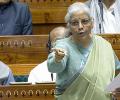
Finance Minister Nirmala Sitharaman launched a strong attack on Rahul Gandhi and the Congress party, accusing them of compromising India's interests on the world stage and selling out farmers and the poor during their time in power.

The government on Wednesday launched Rs 4,531 crore market access support (MAS) intervention scheme for a six-year period (FY26-31) to improve global reach, visibility and competitiveness of Indian exporters through 'structured and outcome-oriented' interventions.

Restoring weighted tax deductions and adopting a petty patents regime can foster firm-level innovative activity critical for competitiveness, points out Nagesh Kumar.

The idea of back-loading the target of fiscal consolidation is perhaps guided by the government's desire to be prepared for any adverse developments in the coming year, points out A K Bhattacharya.

In order to optimise branch efficiency, public sector banks (PSBs) are reworking their strategies to streamline operations and reduce cost amid changing customer behaviour. The strategies include closing or merging low traffic branches and reducing their size in smaller centres.
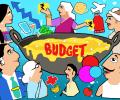
Investors and startup executives are calling for extending the period for an entity to be recognised as a startup from 10 to 15 years for deep-tech companies.

SIP inflows into active equity schemes from areas beyond the top 30 cities (B30), which first crossed this milestone in September 2025, stood at Rs 10,080 crore in October, industry data shows.

This was perhaps a missed opportunity for India to spotlight a core domestic challenge: The scale of workforce preparation required for a young, populous, rapidly growing country seeking to reach net zero, points out Radha Roy Biswas.

People connect with people. No matter how small your brand is, when you share your journey or the why behind your business, you automatically humanise your brand and make it unique as compared to faceless competitors, says Vinayak Burman.

The Comptroller and Auditor General of India (CAG) has launched an integrated audit across 32 states and Union Territories to assess the ease of doing business for the micro, small and medium enterprise (MSME) sector.

This is the first Budget in my memory of Budgets over the last half a century which has embraced upfront, enthusiastically and emphatically, technology, modernity and fiscal sobriety, notes Shreekant Sambrani.

'The tools of warfare are changing. The MoD must deepen its engagement with technology thinkers that can present compelling visions of where warfare may be heading.'

It will enable real-time intel sharing among banks and other financial sector participants to strengthen customer protection against digital fraud.

India is on track to exceed the $4 trillion milestone in 2025-26 (FY26), surpassing the $3.9 trillion gross domestic product (GDP) mark recorded at the end of March 2025, Chief Economic Adviser (CEA) V Anantha Nageswaran said on Tuesday.

'Bank has a robust capital adequacy base. Along with balance sheet preparation, the bank is focusing on strengthening risk management for the new regime.'

For commercial banks to float subsidiaries, approval from the Reserve Bank of India (RBI) may not remain mandatory, according to highly placed sources.

'The Indian consumer is moving so quickly and they have so many options.'

India and Russia are expected to unveil a major nuclear energy partnership during Vladimir Putin's visit, potentially involving Russian small modular reactors and expanded cooperation as India pushes toward its 100-GW nuclear goal by 2047.
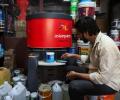
Asian Paints reported a good performance for the second quarter (July-September) of 2025-26 (Q2FY26), with some help from base effects, despite strong competition and extended monsoon. Volume grew in low double digits in the key domestic decorative paints, and value in that segment grew by 6 per cent. Ebitda (earnings before interest, taxes, depreciation, and amortisation) grew 21 per cent year-on-year (Y-o-Y), and PAT (profit after tax) grew 14 per cent. Asian Paints also defended market share better after several quarters where it had lost ground to Birla Opus.

Bajaj Finance's shares fell more than 7 per cent on Tuesday after it trimmed growth guidance for FY26, from 24-25 per cent projected earlier to 22-23 per cent.

'We currently have new proposals worth Rs 1.48 trillion in the pipeline.'

'If a common man wants to buy an air purifier for Rs 10,000, then he will have to shell out Rs 11,800 with 18 percent GST.' 'If he is charged GST at 5 percent the same air purifier will cost Rs 10,500.' 'This saves a one time amount of Rs 1,300 -- and that too just to breathe clean air.'

'We are expecting investment, public and private, of around Rs 40 trillion by 2029.'

How familiar are you with Vibe Coding? Aura Farming? Broligarchy?

The finance minister, in her Budget speech, should focus more on what she is directly responsible for, rather than on programmes where her role is largely supportive, notes Nitin Desai.

The government is finalising a major GST overhaul with automated refunds, pre-filled returns, and analytics-based scrutiny to simplify compliance and boost liquidity for MSMEs.

Part-I of this three-part series dives into Delhi-NCR's SPR, Sohna, Dwarka Expressway, and Jewar Airport leading the charge.

'The momentum is driven by rising affluence, strong demand from HNIs (high net worth individuals) and NRIs (non-resident Indians), an increased appetite for larger, well-located homes by branded developers, and support from the economy.'
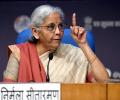
The Budget 2025-26 meets the expectations of fiscal consolidation, maintaining capital expenditure, and boosting consumption through tax cuts.

The services sector employs 188 million people but remains highly informal, trapping most workers in low-wage jobs without social protection.

'They are a poor fit for anyone with near-term goals, low volatility tolerance, or a need for steady income or liquidity.' 'First-time investors should typically avoid them.'

In a review meeting through video conference with chief ministers and representatives of seven states with a high burden of COVID-19 cases, Modi said having micro containment zones will help states in dealing with the spread of the infection and also allow normal activities to continue.

Radical Islamist networks are deliberately targeting Muslim youths embedded within the country's professional and academic ecosystems, leveraging their skills, mobility, and digital reach to quietly strengthen operational capabilities. This trend highlights a dangerous evolution in terror recruitment -- one that exploits ideological faultlines, online echo chambers and transnational radical Islamist influences to attract individuals who outwardly embody India's modern and aspirational narrative, points out Dr Kanchan Lakshman.

'The danger is that when the music stops, the fall will be sudden, faster, and deeper than anyone expects,' warns Debashis Basu.
